All Categories
Featured

Table of Contents
- – Evaluating Virginia Solar Panel Installation Co...
- – The Function Of The 25 kW Property Tax Exempti...
- – How 4.2–4.7 Peak Sun Hours Daily Influence You...
- – Evaluating The Switch Together Program Against...
- – Managing Homeowners Association Authorization ...
- – How The 1,200 W Plug-in Solar Cap Impacts Resi...
Evaluating Virginia Solar Panel Installation Companies For Your Energy Requirements
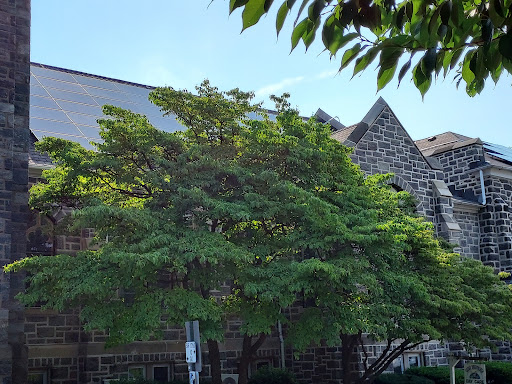
You must prioritize precision when choosing from the various Virginia Solar Panel Installation Companies to ensure your investment yields maximum returns. With the average residential solar installation in the state requiring a 13.99 kW system, you are considering an upfront expense between $30,075 and $40,689 before applying any available incentives. Because these systems currently cost an average of $2.53 per watt, failing to vet your solar firm against rigorous standards like solar certification can lead to significant performance declines over the life of your equipment. By concentrating on authentic credentials and local operating history, you remove the risk of substandard workmanship and ensure compliance with all licensing requirements. This article offers the ultimate framework you need to identify Top-rated solar panel installation companies serving Virginia and secure a project that fulfills your precise energy goals.
“How much energy does your household consume daily? This helps determine the system size.” — Lumina Solar
The Function Of The 25 kW Property Tax Exemption Cap In Solar Panel Installation Planning
The 25 kW property tax break cap is a main financial advantage that ensures your investment in a solar panel installation does not increase your local property tax assessment. This coverage applies to all residential systems up to this capacity, shielding you from the increased valuation typically associated with home improvements. When assessing Which Virginia companies specialize in solar panel installation, prioritize those that clearly delineate how these state-level incentives interact with your specific project scale.
“The Solar Interconnection Grant Program, administered by the Virginia Department of Energy (Virginia Energy), is intended to help offset these costs, enabling public bodies to pursue solar projects that reduce energy expenditures and increase the deployment of clean energy across the Commonwealth.” — energy.virginia.gov
Beyond the tax waiver, your financial returns depend on utilizing available credit programs and federal policy transitions. You must factor in the following fiscal facts when estimating your long-term savings:
- Grid Credit Program: You get full retail-rate credits for all excess energy your system exports back to the grid.
- RECs: You gain tradable credits based on your system's real production, offering an continuous income source.
- Federal Tax Credit: You must set up your system in service prior to January 1, 2026, to qualify, as this credit becomes inaccessible for systems commissioned on or after that date.
Verify your property tax assessment records to confirm the current base value before completing your contract, as this ensures you can accurately monitor the impact of the exemption once your system is active.
You must prioritize a NABCEP certification when choosing a professional solar firm to ensure your 13.99 kW average solar fitting maximizes Virginia’s 4.2 to 4.7 daily irradiance hours per day. To secure the best value, you should contact Lumina Solar to compare every solar installation quote based on an average dollars per watt of $2.53, while confirming that your chosen system qualifies for the property tax exemption available for residential arrays up to 25 kW. You should demand a thorough roof solar compatibility assessment and ascertain if adding a $10,000 to $13,000 energy storage system aligns with your objectives for NEM and Solar Renewable Energy Credits. Finally, ensure that your provider understands local HOA solar rules and can manage the bulk-buy program to decrease your total investment below the standard $30,075 to $40,689 range.
How 4.2–4.7 Peak Sun Hours Daily Influence Your Solar Panel Installation Decision
Roof aptness based on 4.2–4.7 daily irradiance hours daily is the chief metric used to determine if your property can accommodate a high-yield solar fitting. Installers examine your roof’s physical characteristics to ensure the system reaches its maximum production potential within these established irradiance averages.
When you evaluate How Virginia solar panel installation companies compare on technical site assessments, you must prioritize those that perform a detailed analysis of your specific roof geometry. Your installer will examine several crucial factors to model expected energy output:
- Orientation: South-facing roof surfaces usually collect the most consistent sunlight.
- Pitch: The pitch of your roof impacts the efficiency of light absorption throughout the changing seasons.
- Structural Age: A roof nearing the end of its lifespan should be replaced before installing a system meant to last decades.
- Shading Obstructions: Nearby trees, chimneys, or adjacent structures generate shadows that significantly diminish performance.
To determine if your home is a viable candidate, request that your provider provide a production model that accounts for these specific environmental variables. You should cross-reference your current roof age with the expected remaining lifespan of the hardware before signing any installation contract.
Evaluating The Switch Together Program Against Independent Solar Panel Installation In Virginia
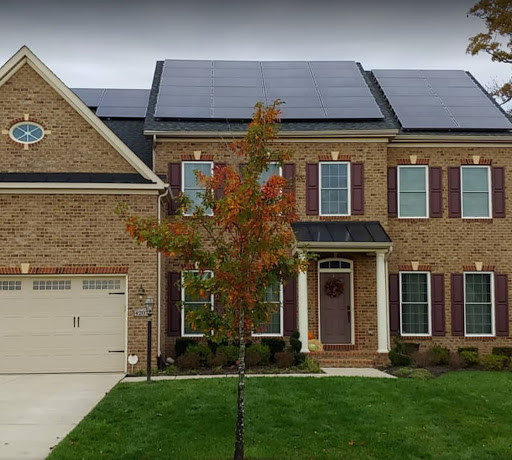
The Switch Together program is a government-backed bulk-purchasing initiative that leverages reverse auctions to lower project costs by aggregating homeowner demand, providing a unique alternative to the traditional process of Finding a reliable solar panel installation company in Virginia. By grouping residents together, this program forces participating installers to rival on price, which often results in lower quotes than those obtained through individual outreach.
“Virginia Shared Solar Program (Community Solar), Rebate, Dominion Energy and Appalachian Power customers can subscribe to a share of.” — dominionenergy.com
When you assess whether to follow this group-purchasing path or engage with individual firms, weigh the specific trade-offs between the two acquisition models:
| Feature | Switch Together Program | Individual Direct Quotes |
|---|---|---|
| Pricing Strategy | Competitive reverse auction | Market-based negotiation |
| Installer Choice | Limited to program partners | Open market selection |
| System Customization | Standardized packages | Highly flexible design |
| Contract Process | Pre-vetted terms | Customized service agreements |
While the program simplifies the search for reputable installers, it may limit your ability to select specific equipment brands or specialized mounting configurations that a custom design might otherwise accommodate. If you have unique roof geometry or specific aesthetic requirements, the uniform nature of mass-produced projects might not align with your goals for the final solar fitting. You should cross-reference the program’s list of participating installers against current online reviews and their standing with the local business bureau to ensure their individual workmanship standards meet your expectations.
Examine the current involved list of installers in your region to determine if they provide the specific panel brands and efficiency ratings you require for your system size.
Managing Homeowners Association Authorization For Your Virginia Solar Panel Installation
HOA rules concerning solar deployment are strictly restricted by state law, which prevents governing entities from placing unreasonable obstacles on your project. Virginia law clearly prohibits homeowners associations from imposing restrictions that increase your total installation cost by more than 5% or reduce the performance of your system by more than 10%. These legal protections ensure that your right to generate clean energy remains protected even if you live within a community governed by limiting covenants.
“However, an association may establish reasonable restrictions concerning the size, place, and manner of placement of such solar energy collection devices on property designated and intended for individual ownership and use.” — law.lis.virginia.gov
When you are assessing Virginia solar panel installation companies worth hiring, emphasize those that show a clear understanding of these statutory limitations. An seasoned solar company will handle the documentation required to override excessive architectural mandates that clash with state-mandated performance standards.
The subsequent table details how these legal thresholds directly affect your project plan and feasibility:
| Regulation Metric | Maximum Allowable Restriction |
|---|---|
| Project Cost Impact | 5% increase limit |
| System Performance Reduction | 10% output limit |
| System Capacity Coverage | Up to 25 kW exemption |
Before finalizing your contract, request that your contractor review your particular community's governing documents to confirm that the suggested array design conforms with both state law and local aesthetic guidelines. Consult your association’s architectural review board with a copy of the state statute to proactively resolve any possible conflicts before equipment delivery.
How The 1,200 W Plug-in Solar Cap Impacts Residential Solar Panel Installation
The 1,200 W plug-in solar cap defines the maximum capacity allowed for simplified, grid-connected solar power systems that residents can install without a traditional rooftop installation process. These systems work by connecting directly to a standard wall outlet, providing a streamlined option for homeowners who are interested in generating renewable energy but are not ready for a full-scale solar setup. While you might concentrate on Finding a reliable solar panel installation company in Virginia for your primary roof-mounted system, these plug-in units offer a unique, entry-level approach to energy independence.
“Virginia's new plug-in solar law covers qualifying portable devices with a maximum output of 1200 watts.” — youtube.com
Safety and regulatory compliance are vital when utilizing these systems, as they must meet specific technical requirements to function legally on the electrical grid. The following criteria govern the deployment of these small-scale systems:
- Volume Limit: Total production is strictly capped at 1,200 watts per residence.
- Safety Standard: All units must be UL approved to ensure that they instantly disconnect from the grid during power outages.
- Linking Method: Systems must be engineered for immediate connection to a standard wall outlet.
- Regulatory Status: These systems grew legally allowable as of July 1, 2026.
Before purchasing hardware, verify that the specific model you choose bears the necessary UL certification for automatic grid disconnection. Confirm with your local utility provider that your home's internal wiring can safely support the back-feeding of energy through your chosen outlet setup.

Table of Contents
- – Evaluating Virginia Solar Panel Installation Co...
- – The Function Of The 25 kW Property Tax Exempti...
- – How 4.2–4.7 Peak Sun Hours Daily Influence You...
- – Evaluating The Switch Together Program Against...
- – Managing Homeowners Association Authorization ...
- – How The 1,200 W Plug-in Solar Cap Impacts Resi...
Latest Posts
Common Mistakes Individuals Make With Washington DC Solar Panel Installation Companies
What To Ask Virginia Solar Panel Installation Companies Before You Purchase
Receiving Accurate Quotes From Virginia Solar Panel Installation Companies
More
Latest Posts
Common Mistakes Individuals Make With Washington DC Solar Panel Installation Companies
What To Ask Virginia Solar Panel Installation Companies Before You Purchase
Receiving Accurate Quotes From Virginia Solar Panel Installation Companies